



Semantic
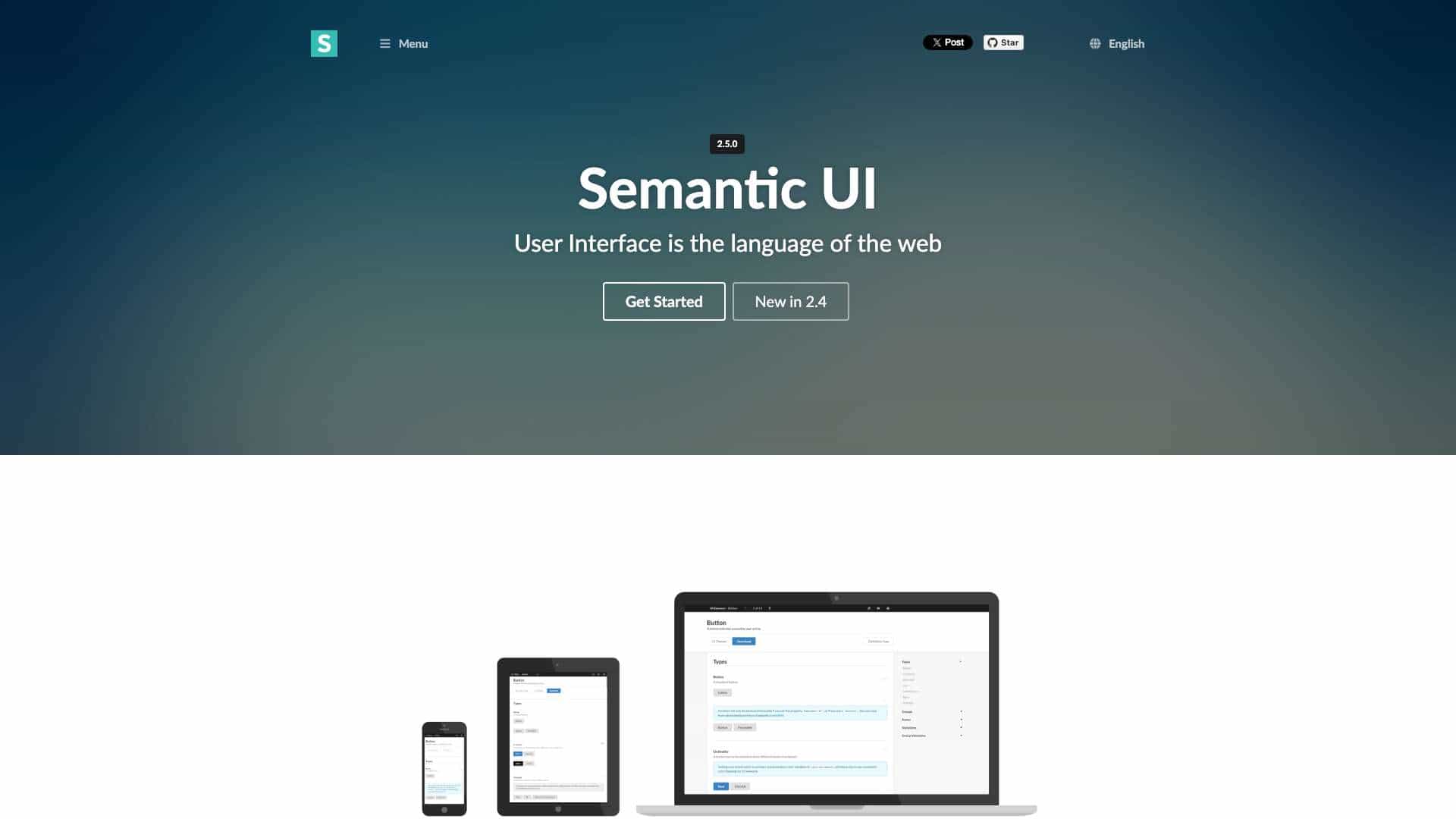
Semantic UI is a development framework for creating beautiful, responsive web interfaces using human-friendly HTML and intuitive JavaScript.
Score
50
User Rating
1.0
Free/Trial Support
Supported
Starting Price
--
Last Updated
Aug 04, 2026
Overview
What is Semantic?
Semantic UI is a free, open-source UI framework that helps developers and designers build responsive websites with concise HTML and natural language-like class syntax. It includes over 50 UI components, high-level theming variables, and integrations with popular libraries like React and Angular.
What is Semantic used for?
Top Features
- Human-friendly HTML syntax
- Intuitive JavaScript behaviors
- Responsive design with em-based sizing
- High-level theming with 3000+ variables
- Integration with React, Angular, and other libraries
- Performance logging for debugging
- Over 50 UI components including buttons, forms, and menus
How to use Semantic?
Use Semantic UI by including its CSS and JS files in your web project, then apply its classes to HTML elements for styling and behaviors. It supports responsive design, theming, and debugging tools, and can be integrated with frameworks like Meteor or Ember for enhanced functionality.
Alternative Tools
No alternative tools found
Pros & Cons
Pros
- Free and open-source under MIT license
- Highly customizable with extensive theming
- Responsive and mobile-friendly
- Large community and support
- Easy to learn with natural language classes
Cons
- May have a learning curve for beginners
- Limited built-in advanced features compared to some frameworks
- Requires manual setup for complex integrations
Use Cases
- Building responsive websites and web applications
- Creating custom UI themes for projects
- Integrating with JavaScript frameworks like React or Angular
- Developing enterprise-ready interfaces with debugging tools
Semantic Pricing
Free Plan
No detailed pricing information available
User Reviews
1.0
out of 5
1.0
No reviews yet
Be the first to review this tool!